
 en
 日本語
 Français
 Deutsch

How Suede Microfiber Fabric Is Shaping the Future of Premium Automotive Interiors
Walk into a premium vehicle and the first impression often comes from the interior materials. The feel of the seats, the finish of the door panels and even the texture around the center console all influence how the cabin is perceived. Leather has traditionally occupied this space, but automotive designers now have more material options to work with.
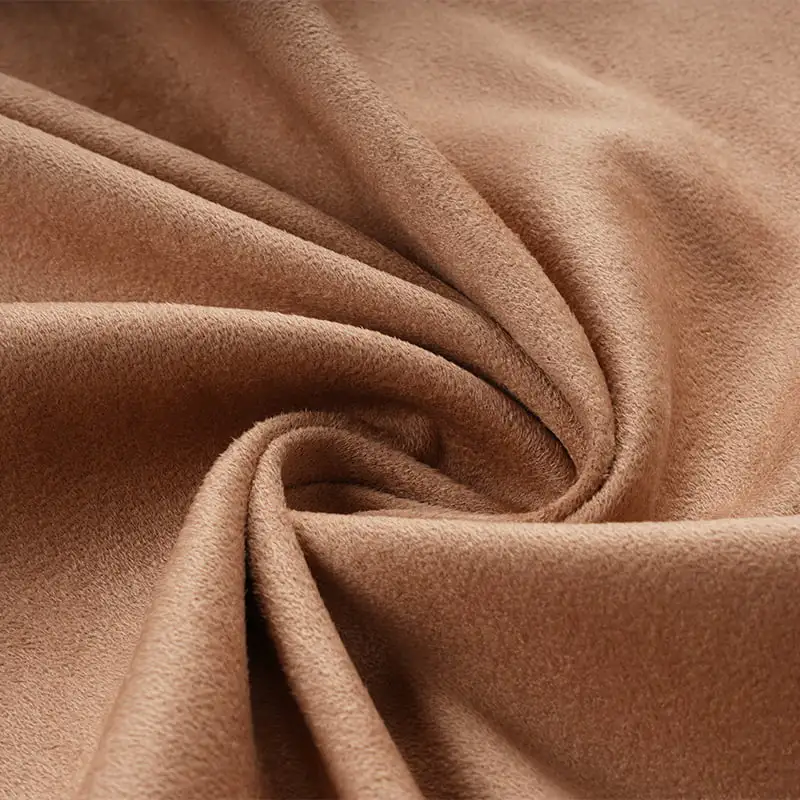
Suede Microfiber Fabric is one of them. Its soft, brushed surface gives interiors a refined appearance, while its synthetic construction allows manufacturers to adjust thickness, color, backing and texture. It is being considered for seating, door trims, dashboards and other areas where appearance and everyday durability both matter.
What Makes Microfiber Suede Attractive to Automotive Designers?
Conventional suede has a distinctive soft surface, but it can involve higher material costs and more demanding maintenance. Microfiber alternatives reproduce some of that tactile character using very fine synthetic fibers, commonly made from polyester and polyamide.
The finished fabric has a dense, suede-like surface that feels soft without relying on conventional animal leather. Manufacturers can also produce different colors and surface finishes with greater control over batch specifications.
Several characteristics make it useful for automotive interiors:
- Soft surface texture: Provides a comfortable feel on seats, armrests and frequently touched trim.
- Consistent appearance: Allows manufacturers to specify colors and surface finishes across different interior components.
- Flexible construction: Can be developed with different thicknesses and backing materials.
- Weight considerations: Some constructions offer a weight advantage over conventional upholstery materials.
- Design versatility: Suitable for different combinations of stitching, panel shapes and decorative details.
The actual properties depend on fiber composition, density and finishing. Two fabrics sold under the same microfiber suede description may have quite different performance characteristics.
Surface Appearance Is Only Part of the Engineering Work
A fabric sample may look excellent in a showroom but behave differently after months of contact with clothing, repeated seat adjustments and exposure to sunlight.
Automotive applications place several demands on textile materials. Seats experience constant friction and compression, while door panels and dashboards may be exposed to higher temperatures and UV radiation.
Fiber fineness affects the softness of the surface. Fabric density influences its appearance and resistance to wear, while the backing contributes to dimensional stability and flexibility during installation.
Finishing treatments can provide additional properties, including stain resistance and improved colorfastness. However, these treatments need to be tested rather than judged by their descriptions. A stain-resistant finish does not make a textile completely immune to spills or cleaning chemicals.
For automotive use, the complete material matters: face fabric, backing, adhesive compatibility, stitching behavior and installation method all contribute to the finished result.
Performance Tests That Matter for Automotive Interiors
Different interior components do not experience identical wear. Seat fabric needs to withstand repeated friction, whereas dashboard materials must cope with temperature changes and prolonged light exposure.
| Performance Factor | Automotive Requirement | Recommended Evaluation |
|---|---|---|
| Abrasion Resistance | Withstand repeated contact and friction | Martindale or applicable abrasion testing |
| Colorfastness | Maintain appearance during use | Rubbing and lightfastness tests |
| Dimensional Stability | Resist shrinkage or distortion | Heat and humidity conditioning |
| Seam Performance | Maintain integrity around stitched areas | Seam strength and seam slippage tests |
| Surface Durability | Limit pilling and fiber deterioration | Pilling and surface wear assessments |
| Chemical Resistance | Tolerate approved cleaning products | Cleaning chemical compatibility testing |
Test methods and acceptance limits should follow the vehicle manufacturer's requirements. Passing an abrasion test, for example, does not establish that a fabric is also suitable for dashboard applications or meets automotive flammability requirements.
Color, Texture and Surface Treatments Create More Design Options
One reason automotive designers use microfiber suede is the range of finishes available. The same basic material can look quite different depending on its color, surface direction and manufacturing treatment.
A vehicle manufacturer might use a dark fabric on seat bolsters and a contrasting shade on the central seating panels. Matching microfiber suede can then appear on door inserts or the center console to connect the different interior elements visually.
Suppliers can customize:
- Fiber composition and fabric density.
- Fabric thickness and backing material.
- Color matching and surface shade.
- Nap direction and texture consistency.
- Perforation and embossing patterns.
- Flame-retardant and other application-specific treatments.
Nap direction deserves particular attention. Brushed microfiber can appear lighter or darker depending on the direction in which its fibers lie. When several fabric panels are installed next to each other, inconsistent surface orientation may create visible color differences even when the material comes from the same batch.
A sample should therefore be checked under different lighting conditions and after the intended cutting and upholstery processes.
Recycled Fibers and the Sustainability Question
Automotive manufacturers are paying more attention to the materials used throughout a vehicle, including interior textiles. Some microfiber suede products can incorporate recycled polyester, depending on the manufacturer's sourcing and production capabilities.
However, recycled content alone does not establish the environmental performance of a fabric. Buyers should also consider manufacturing energy, chemical treatments, water consumption, durability and end-of-life options.
Longer service life is another relevant consideration. A fabric that retains its appearance and structural properties for longer may reduce the need for premature upholstery replacement.
When evaluating sustainability claims, request information about recycled content, material traceability and applicable certifications. General descriptions such as eco-friendly or environmentally responsible are not sufficient without supporting documentation.
What Should Automotive Buyers Check Before Ordering?
Selecting a fabric based on color and hand feel alone can create problems later in vehicle production. A material may look suitable but prove difficult to cut, stitch, laminate or bond to the intended substrate.
Before approving a supplier, buyers should review:
- Technical specifications: Fiber composition, fabric weight, thickness and backing construction.
- Batch consistency: Color, density, texture and nap direction across production lots.
- Automotive test results: Relevant abrasion, flammability, emissions and environmental testing.
- Processing compatibility: Performance during cutting, sewing, bonding and installation.
- Production capacity: Ability to supply required widths, colors and quantities consistently.
For OEM projects, testing should use the actual upholstery construction wherever possible. The interaction between fabric, foam, backing and adhesive can affect performance in ways that cannot be assessed from the textile alone.
Bringing Microfiber Suede Into Premium Cabin Design
Suede Microfiber Fabric gives automotive designers another way to develop distinctive interiors without relying entirely on conventional leather. Its range of textures, colors and constructions makes it suitable for different cabin components, from seating surfaces to decorative trim.
Its value, however, depends on more than how the material feels when touched. Abrasion resistance, color stability, installation behavior and environmental performance all need to meet the vehicle's requirements.
For manufacturers sourcing this material, the most useful starting point is a physical sample followed by application-specific testing. Checking how the fabric behaves after stitching, cleaning and repeated use provides a much clearer basis for approval than appearance alone.
Your email address will not be published. Required fields are marked *

andyzhu@goreayn.com
+86 15888381518
Add: No.99, Lane 166, Tianyu Road, Tudian Town, Tongxiang Zhejiang, China
Copyright © Goreayn New Materials (Zhejiang) Co., Ltd. All rights reserved.
China Technical Textile Manufacturer
